
March
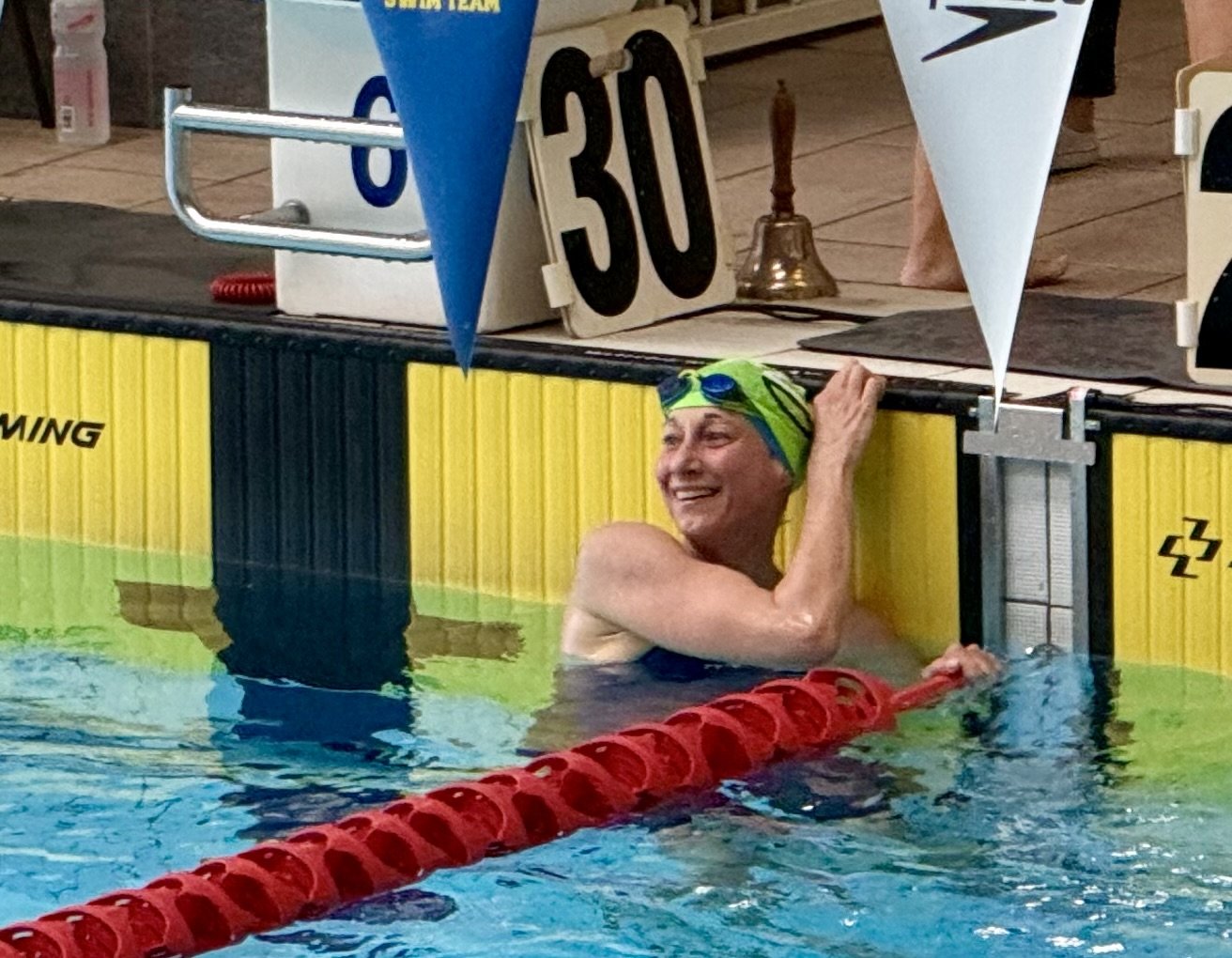
Swim England South East 1500m Masters Meet 2026
1500m done and what a moment it was. Touching the wall at the end felt like more than finishing a race; it was a powerful personal milestone after months of challenge, recovery, and steady effort beneath the surface.
The journey back hasn’t been smooth. Recovering from proctectomy surgery brought its share of turbulence, with setbacks that kept me out of the water longer than I expected. There were times I felt adrift, but also a quiet determination that kept me afloat. This race became the culmination of two months of consistent, focused training, each session another stroke towards something that once felt just out of reach.
It’s been two years since I last competed at this distance, moving up into a new age category (50–54) made the return even more meaningful. This wasn’t just about racing again, it was overcoming adversity and proving to myself that perseverance, determination, and resilience can carry you through even the roughest waters.

APPRAISE Research Study Day at LBU
It was fantastic to be back in Leeds meeting with the APPRAISE research team and finalising the details for this PROM that is due to roll out in June.
‘A Patient-reported outcome measure (PROM), for PRolApse, Incontinence and meSh complication surgery (APPRAISE) is a three-year National Institute of Health Research (NIHR) funded study which will better support women to report the impact of pelvic floor surgery upon their quality of life.’
‘Different surgical treatments are available to treat pelvic organ prolapse (POP) and stress urinary incontinence (SUI). One of these treatments uses polypropylene mesh which has led to complications requiring further corrective surgery. However, there is currently no surgical intervention-specific patient-reported outcome measure (PROM) available for these women to tell us about the effects of pelvic floor surgery on their quality of life.
As a result, evidence is missing on which are the most appropriate treatments for pelvic organ prolapse (POP) and stress urinary incontinence (SUI) and their risks and complications, largely due to failings in being able to capture and record patient experiences and reports of harm over time. There is therefore a need for a PROM specific for urogynaecology surgeries to be developed to support further research into the best treatment decisions for future procedures.’
visit https://www.leedsbeckett.ac.uk/research/iris/appraise/ for further details.
I joined the APPRAISE research study team at Leeds Beckett University in September 2023 as a PPI (Patient and Public Involvement) and I became a Co- Applicant Lead PPI in November 2023.
I am hugely passionate about improving the outcomes for Women’s Health having had personal experience of several surgeries for the treatment and management of SUI (stress urinary incontinence & POP (Pelvic Organ Prolapse) including a TVT mesh sling procedure that left me with significant pain for sixteen years.
During these years, my concerns that the mesh might be causing my pain were repeatedly dismissed, despite attending multiple hospital appointments across different hospitals, where I was receiving ongoing treatment and management for incontinence.
If I hadn’t taken control and advocated for my own health, which resulted in the removal of my mesh privately, my quality of life today would be very different. I feel fortunate to have had my mesh removed.
Sadly, many women continue to suffer as a result of surgical procedures involving mesh, where the harm has far outweighed any benefit. Many have been left with life-altering injuries, their concerns dismissed and their voices unheard.
I hope the patient feedback from these questionnaires will amplify the voices of all women undergoing these procedures and help to shape and improve future care in Women’s Health.
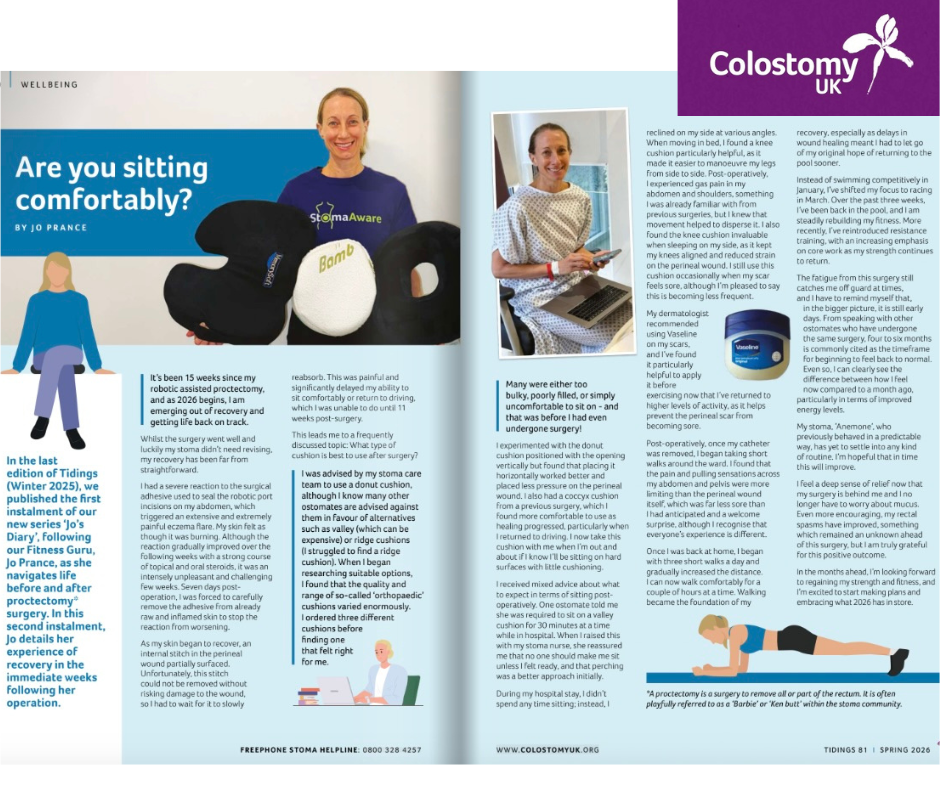
Tidings - Spring 2026
Writing for Colostomy UK’s ‘Tidings’ magazine
I wrote this piece back in January, the 2nd installment detailing my recovery in the immediate weeks following robotic assisted proctectomy and the removal of my rectum. Ostomates are often given differing clinical advice regarding stoma management and recovery from surgery.
In this piece I wanted to highlight some of these variations that I encountered drawing on my own personal experience of trying to find the right cushion to sit on to improve post operative care and comfort.