
February

This month I turned 50 and alongside planning a year filled with celebrations and new experiences, I’ve found myself reflecting on the journey that has shaped who I am today.
I was fortunate to receive many thoughtful gifts, but my favourite was a photo book my husband lovingly created, capturing 50 years of memories. As I turned each page, revisiting moments with family and friends and milestones along the way, I was reminded of just how many happy memories have filled those years.
Professional Development
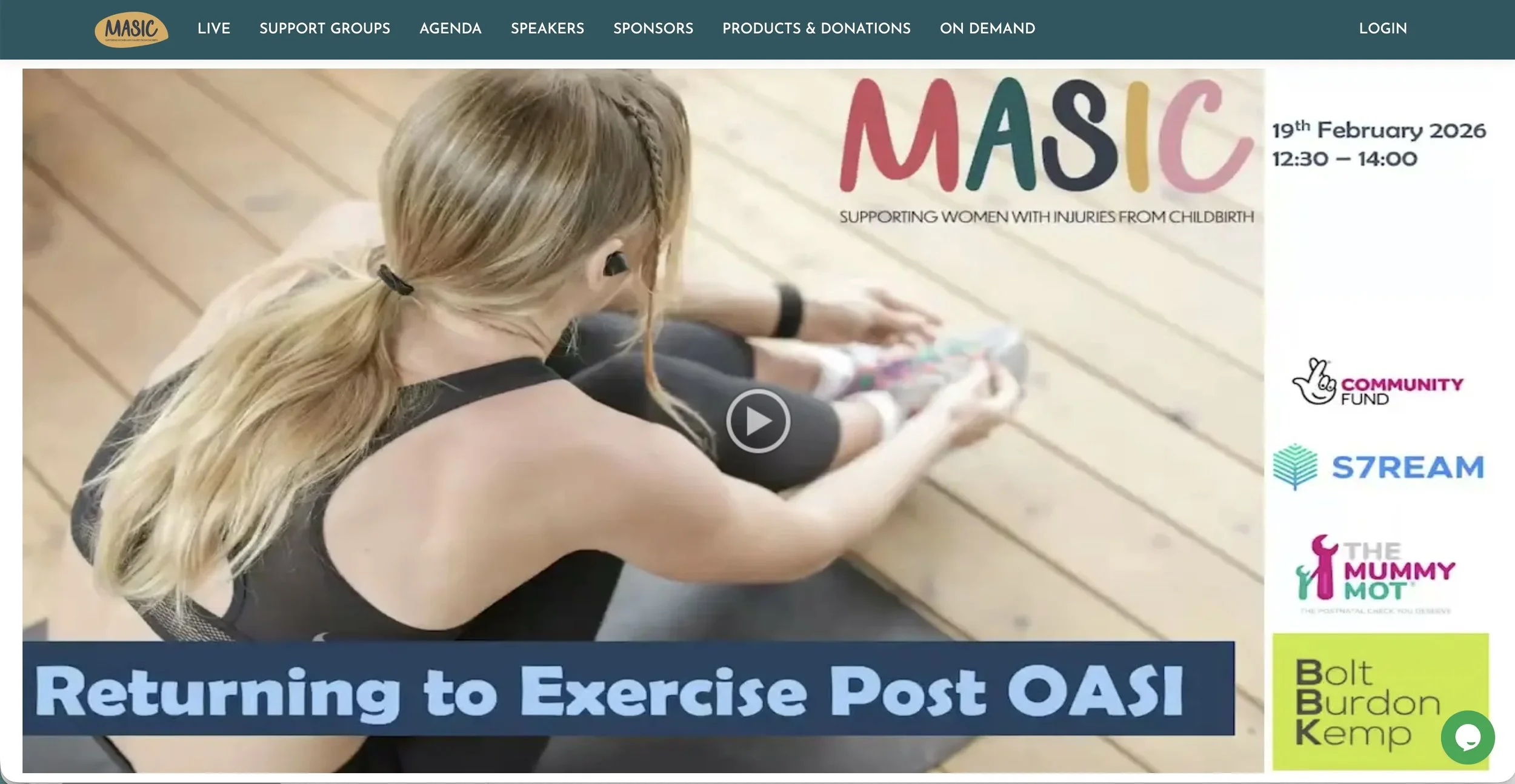
This webinar hosted by The MASIC Foundation focuses on how to return to exercise post OASI birth injury.
Chaired by MASIC Advocate Karen Evans, with presentations from two leading Pelvic Health Physiotherapists – Gráinne Donnelly & Chloe Stevens

Online: Solace Summit 2026
The Solace Foundation is an American charity that supports individuals affected by pelvic floor injuries such as OASI (obstetric anal sphincter injuries), through advocacy, education, and community based emotional support.
This Summit explored obstetric anal sphincter injury (OASI) from both clinical and lived perspectives, beginning with an overview of its epidemiology, including prevalence, risk factors, and evolving trends in diagnosis and reporting, alongside emerging survey data highlighting its significant mental health impacts and the need for trauma-informed postpartum care.
It then examined the overlap between pelvic floor dysfunction and postpartum mood disorders, emphasising their prevalence, bidirectional relationship, and the psychological consequences such as depression, anxiety, and reduced quality of life.
Further discussion addresses the broader psychosocial effects of pelvic floor dysfunction, including its influence on self-image, sexual identity, intimate relationships, and communication, while offering trauma-informed approaches to managing sexual dysfunction.
The session concluded with a personal account that illustrates the real-world emotional and mental health impacts of birth-related injuries, reinforcing the importance of holistic, patient centred care.